
Soft Motion
Delight your consumers with a more friendly and thoughtful design.
- Home
- Linear Damper
What is Linear Damper?
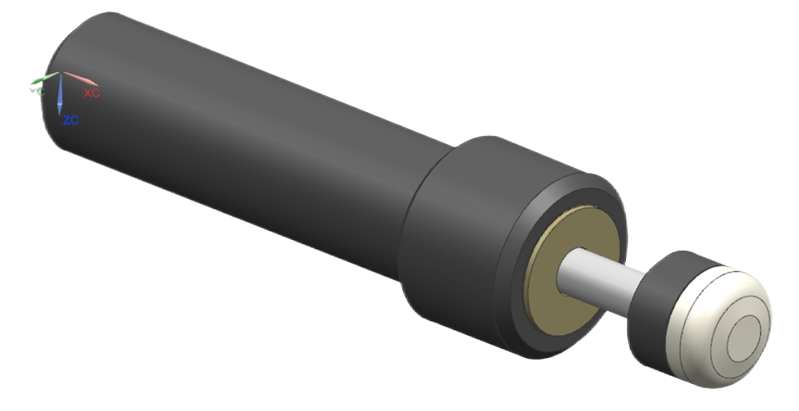
A linear damper, is a mechanical device used to absorb and dissipate kinetic energy for smooth deceleration.
It helps prevent sudden jolts and noise, and it significantly extends the lifespan of the product they’re installed on. They’re a common feature in engineering because they regulate motion, reduce vibrations, and provide damping in mechanical setups.
Linear dampers find applications in various sectors, including home appliances, office equipment, and automotive.
What are the different types of linear dampers?
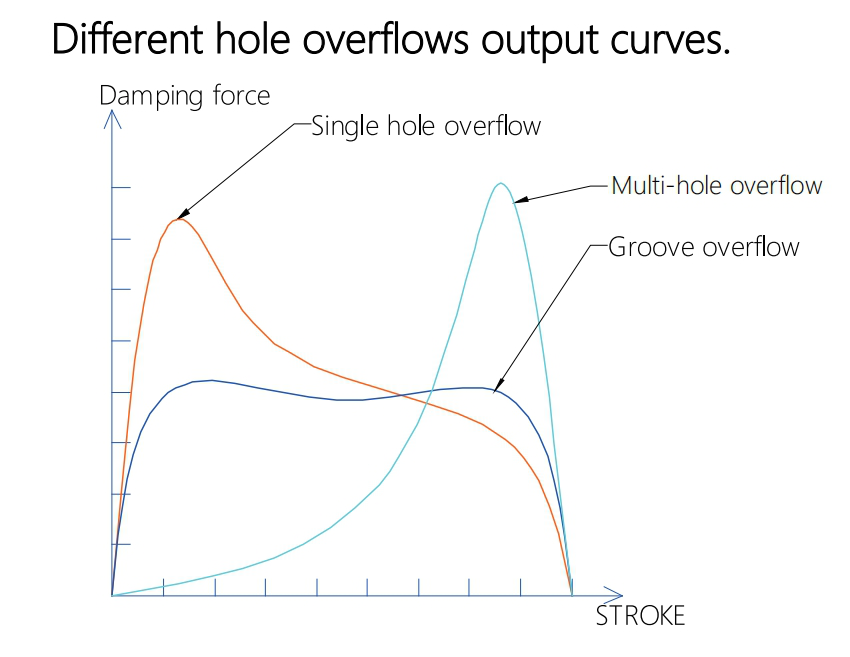
Different application requires different damping curve. Linear damper’s efficient modular design offers quick development of customized solutions for various furniture and other applications.
Linear dampers are divided into single-hole overflow, multi-hole overflow, groove overflow, compound overflow and other modes in terms of overflow modes, and the damping curves are also different: as shown on the right.
Thanks to modular design, linear dampers can achieve push-in damping, pull-out damping, and two-way damping.
Damper Category

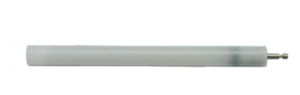
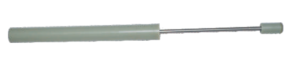
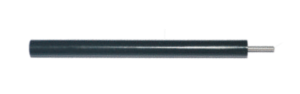

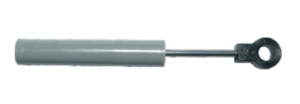
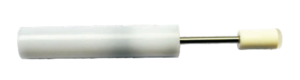
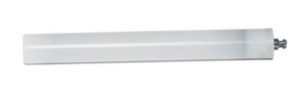
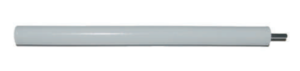
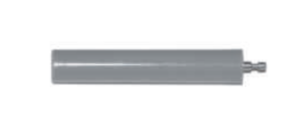
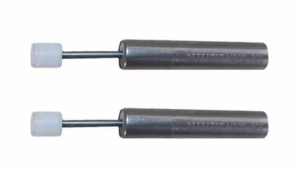
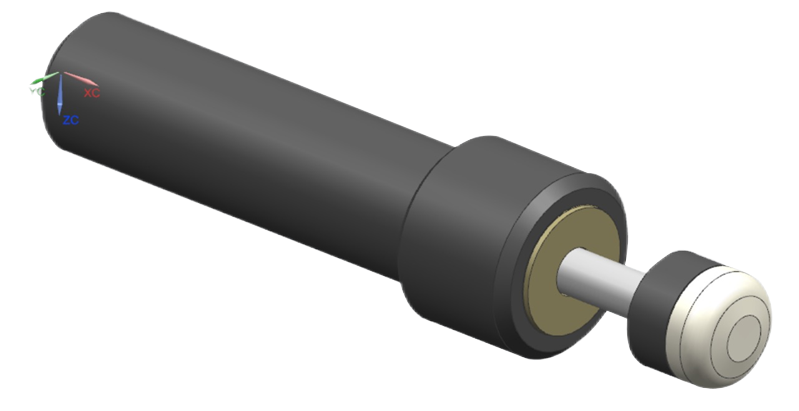
| Spec | ΦCylinder | Stroke | Length/mm | ΦPiston rod | Characteristic | Temperature | Material priston | Material cylinder | Remarks |
|---|---|---|---|---|---|---|---|---|---|
| JP-804-92P | Φ7.2 | 58 | 157 | -20℃-60℃ | Stainless Iron | POM | |||
| JP-804-82P | Φ7.2 | 48 | 137 | 2.5 | -20℃-60℃ | Stainless Iron | POM | ||
| PR-L223 | Φ8 | 12 | 62 | -20℃-60℃ | SUS304 | SUS304 | Customizable length | ||
| JP-802-88 | Φ8.4 | 50 | 165 | -20℃-60℃ | Stainless Iron | POM | |||
| JP-802-115 | Φ8.4 | 88 | 229 | -20℃-60℃ | Stainless Iron | POM | |||
| JP-802-69P | Φ8.5 | 46 | 119 | 2.5 | passive return | -20℃-60℃ | Stainless Iron | POM | |
| JP-802-60P | Φ8.5 | 35 | 104 | 2.5 | passive return | -20℃-60℃ | Stainless Iron | POM | |
| JP-802-82P | Φ8.6 | 50 | 143.5 | 2.5 | passive return | -20℃-60℃ | Stainless Iron | POM | |
| JP-802-82A | Φ8.6 | 45 | 145.5 | 2.3 | active return | -20℃-60℃ | Stainless Iron | POM | |
| JP-802-49P | Φ8.6 | 24 | 78.5 | 2.3 | passive return | -20℃-60℃ | Stainless Iron | POM | |
| JP-802-49A | Φ8.6 | 20 | 81.9 | 2.3 | active return | -20℃-60℃ | Stainless Iron | POM | |
| JP-803-117P | Φ9 | 83.5 | 208 | 2.5 | passive return | -20℃-60℃ | Stainless Iron | POM | |
| JP-803-140P | Φ9 | 100 | 253 | 2.5 | -20℃-60℃ | Stainless Iron | POM | ||
| JP-803-92A | Φ9.5 | 53 | 168 | 2.5 | active return | -20℃-60℃ | Stainless Iron | POM | |
| JP-803-92P | Φ9.6 | 60 | 160 | 2.5 | passive return | -20℃-60℃ | Stainless Iron | POM | |
| JP-801-108P | Φ9.8 | 78 | 193.5 | 2.3 | passive return | -20℃-60℃ | Stainless Iron | POM | |
| PR-L202 | Φ10 | 14 | active return | -20℃-120℃ | SUS201 | SUS304 | Customizable length | ||
| PR-L208 | Φ10 | 14 | 68 | active return | -20℃-60℃ | SUS201 | 25#/Electro nickelling/sus316 | Customizable length | |
| JP-CA10 | Φ10 | 57 | 15 | -20℃-60℃ | SUS304 | POM | |||
| JP-801-115.5 | Φ10 | 75 | 215 | -20℃-60℃ | Stainless Iron | POM | |||
| JP-801-100 | Φ10 | 67 | 180 | -20℃-60℃ | Stainless Iron | POM | |||
| JP-CU038 | Φ10 | 22.3 | 85.8 | -20℃-60℃ | Stainless Iron | POM | |||
| JP-801-50A | Φ10 | 22 | 80 | active return | -20℃-60℃ | Stainless Iron | POM | ||
| JP-801-77A | Φ10.2 | 38.5 | 115.5 | active return | -20℃-60℃ | Stainless Iron | POM | ||
| JP-801-82P | Φ10.5 | 52.5 | 147.6 | passive return | -20℃-60℃ | Stainless Iron | POM | ||
| JP-801-82A | Φ10.5 | 45 | 150.5 | passive return | -20℃-60℃ | Stainless Iron | POM | ||
| PR-L241 | Φ12 | 10 | 58.5 | active return | -20℃-85℃ | SUS304 | Aluminium alloy | Customizable length | |
| JP-CA1210 | Φ12 | 10 | 72 | -10℃-50℃ | SUS304 | POM |
How does a linear damper work?
When an object strikes the piston rod, impact force travels through the rod to the piston, moving it downward.
Hydraulic fluid compression, passing through the overflow hole, produces damping pressure, overflow hole size, oil viscosity, and impact speed collectively influence damper thrust for effective deceleration damping.
What factors affect damping performance?
- 1Fluid Viscosity:The thickness of the damping fluid inside the damper impacts its ability to resist motion. Thicker fluids offer more resistance, resulting in stronger damping forces.
- 2Temperature Sensitivity:Changes in temperature affect the viscosity of the damping fluid, thus influencing damping performance. Variations in temperature can lead to fluctuations in the fluid’s flow properties, altering damping behavior accordingly.
- 3Piston Geometry:The size, shape, and surface features of the piston affect how the damping fluid flows within the damper, ultimately influencing damping performance. Optimizing piston design can improve damping efficiency and system stability.
- 4Orifice Size and Configuration:The dimensions and arrangement of orifices through which the damping fluid flows play a critical role in regulating damping forces. Adjusting these parameters allows for precise control of damping characteristics to meet specific requirements.
- 5Operational Velocity:The speed at which the damper operates impacts damping effectiveness. Higher velocities result in increased damping forces due to enhanced viscous action, leading to stronger damping effects.
- 6Seal Integrity:Maintaining the integrity of seals and gaskets within the damper is essential for preventing fluid leakage and ensuring proper containment. Damaged or degraded seals can compromise damping performance over time by allowing fluid loss.
Linear damper Application
Linear damper is available for
- linear motion
- rotary motion
When the cover is rotated open, the rotating body rises, the slope climbs to the apex, and the linear damper piston rod extends – When the cover is rotated and closed, the rotating body descends, the ramp engages, and the linear damper piston rod presses the boss at the bottom of the housing. The piston rod is pressed in, creating a cushion.
How Do I Choose a Linear Damper
Different impact speeds will cause the linear damper to output completely different damping thrust. Please select the type within a reasonable speed direction;